
CBSE Class 10 Mathematics Polynomials MCQs
Refer to CBSE Class 10 Mathematics Polynomials MCQs Set A provided below available for download in Pdf. The MCQ Questions for Class 10 Mathematics with answers are aligned as per the latest syllabus and exam pattern suggested by CBSE, NCERT and KVS. Chapter 2 Polynomials Class 10 MCQ are an important part of exams for Class 10 Mathematics and if practiced properly can help you to improve your understanding and get higher marks. Refer to more Chapter-wise MCQs for CBSE Class 10 Mathematics and also download more latest study material for all subjects
MCQ for Class 10 Mathematics Chapter 2 Polynomials
Class 10 Mathematics students should refer to the following multiple-choice questions with answers for Chapter 2 Polynomials in Class 10.
Chapter 2 Polynomials MCQ Questions Class 10 Mathematics with Answers
MCQs on Polynomials
-
If one zero of the quadratic polynomial is 2, then the value of is:
A) 10 B) –10 C) 5 D) –5
Answer: B) –10 -
Given that two of the zeroes of the cubic polynomial are 0, the third zero is:
A) B) C) D) None of these
Answer: A) -
If one of the zeroes of the quadratic polynomial is –3, then the value of is:
A) 2 B) –2 C) 1 D) –1
Answer: A) 2 -
A quadratic polynomial whose zeros are –3 and 4 is:
A) B) C) D)
Answer: C) -
If the zeroes of the quadratic polynomial are 2 and –3, then:
A) B) C) D)
Answer: D) -
The number of polynomials having zeroes as –2 and 5 is:
A) 1 B) 2 C) 3 D) more than 3
Answer: D) more than 3 -
If one zero of the quadratic polynomial , , then:
A) zeros cannot both be positive B) zeros cannot both be negative C) are always unequal D) are always equal
Answer: A) cannot both be positive -
If the zeroes of a quadratic polynomial , , are equal, then:
A) and have opposite signs B) and have opposite signs C) and have the same sign D) and have the same sign
Answer: C) and have the same sign -
If one of the zeroes of a quadratic polynomial of the form is the negative of the other, then:
A) it has no linear term and the constant term is negative B) it has no linear term and the constant term is positive C) can have a linear term but the constant term is negative D) can have a linear term but the constant term is positive
Answer: A) it has no linear term and the constant term is negative -
The zeroes of the quadratic polynomial are:
A) both negative B) one positive and one negative C) both positive and unequal D) both equal and positive
Answer: D) both equal and positive
Question : If 5 is a zero of the quadratic polynomial x2 - kx -15, then the value of k is
a) 2
b) –2
c) 4
d) – 4
Answer : 2
Question : A quadratic polynomial with 3 and 2 as the sum and product of its zeroes respectively is
a) x2 -3x +2
b) x2 -2x +2
c) x2 -2x -2
d) None of these
Answer : x2 -3x +2
Question : A quadratic polynomial, whose zeroes are 5 and –8 is
a) x2 +3x - 40
b) None of these
c) x2 -3x - 40
d) x2 -13x - 40
Answer : x2 +3x - 40
Question : The number of polynomials having exactly two zeroes 1 and –2 is
a) 1
b) 2
c) 3
d) infinitely many
Answer : 1
Question : Given that one of the zeroes of the cubic polynomial ax3 + bx2 + cx + d is zero, the product of the other two zeroes is
a) c/a
b) 0
c) -b/a
d) -c/a
Answer : c/a
Question : Given that two of the zeroes of the cubic polynomial ax 3 + bx2 + cx + d are 0, the value of c is
a) equal to 0
b) can’t say
c) greater than 0
d) less than 0
Answer : equal to 0
Question : If the zeroes of the quadratic polynomial ax2 + bx + c, c ≠ 0 are equal, then
a) c and a have the same sign
b) c and b have the same sign
c) c and a have opposite signs
d) c and b have opposite signs
Answer : c and a have the same sign
Question : The zeroes of the quadratic polynomial x2 + kx + k, k ¹ 0
a) cannot both be positive
b) are always equal
c) cannot both be negative
d) are always unequal
Answer : cannot both be positive
Question : The zeroes of the quadratic polynomial x2 + ax + b a, b > 0 are
a) both negative
b) both positive
c) one positive one negative
d) can’t say
Answer : both negative
Question : If the graph of a polynomial intersects the x-axis at exactly two points, then it
a) can be a cubic or a quadratic polynomial
b) cannot be a linear or a cubic polynomial
c) can be a quadratic polynomial only
d) can be a linear or a quadratic polynomial
Answer : can be a cubic or a quadratic polynomial
Question : The zeroes of the quadratic polynomial x2 +99x +127 are
a) both negative
b) both equal
c) both positive
d) one positive and one negative
Answer : both negative
Answer : C
Question. The value of k for which (–4) is a zero of the polynomial x2 – x – (2k +2) is
(a) 3
(b) 9
(c) 6
(d) –1
Question. If the zeroes of the quadratic polynomial ax2 + bx + c, c ≠ 0 are equal, then 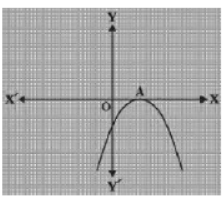
(a) c and a have opposite sign
(b) c and b have opposite sign
(c) c and a have the same sign
(d) c and b have the same sign
Question. The number of zeroes of the polynomial from the graph is
(a) 0
(b) 1
(c) 2
(d) 3
Question. If one of the zero of the quadratic polynomial x2 +3x + k is 2, then the value of k is
(a) 10
(b) –10
(c) 5
(d) –5
Question. A quadratic polynomial whose zeroes are –3 and 4 is
(a) x2 – x +12
(b) x2 +x + 12
(c) 2x2 + 2x – 24.
(d) none of the above.
Question. The relationship between the zeroes and coefficients of the quadratic polynomial ax2 + bx + c is
(a) α + β = c/a
(b) α + β = -b/a
(c) α + β =-c/a
(d) α + β = b/a
Question. The zeroes of the polynomial x2 + 7x + 10 are
(a) 2 and 5
(b) –2 and 5
(c) –2 and –5
(d) 2 and –5
Question. The relationship between the zeroes and coefficients of the quadratic polynomial ax2 + bx + c is
(a) α.β = c/a
(b) α.β = -b/a
(c) α.β = -c/a
(d) α.β = b/a
Question. The zeroes of the polynomial x2 – 3 are
(a) 2 and 5
(b) –2 and 5
(c) –2 and –5
(d) none of the above
Question. The number of zeroes of the polynomial from the graph is
(a) 0
(b) 1
(c) 2
(d) 3
Question. A quadratic polynomial whose sum and product of zeroes are –3 and 2 is 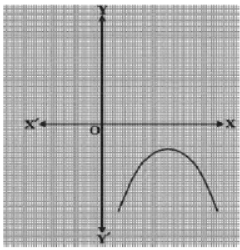
(a) x2 – 3x +2
(b) x2 + 3x + 2
(c) x2 + 2x – 3.
(d) x2 + 2x + 3.
Question. The zeroes of the quadratic polynomial x2 + kx + k, k ≠ 0 ,
(a) cannot both be positive
(b) cannot both be negative
(c) are always unequal
(d) are always equal
Question : Which of the following is not the graph of a quadratic polynomial?
a)

b)

c)

d)

Answer :
Question :

a) –1, –1
b) 1, –1
c) 1, 1
d) 3, –3
Answer : –1, –1
Question : Which of the following is a polynomial
a) 3x2 -3x +1
b) x2 + x-2 +7
c) 2x2 -3x +1
d) None of these
Answer : 3x2 -3x +1
Question : If one zero of the quadratic polynomial x2 -5x + k is –4 ,then the value of k is
a) –36
b) 18
c) –18
d) 36
Answer : –36
Question : If the zeroes of the quadratic polynomial x2 +(a +1)x + b are 2 and –3, then
a) a = 0, b = -6
b) a = 2, b = -6
c) a = 5, b = -1
d) a = -7, b = -1
Answer : a = 0, b = -6
Question : If a polynomial of degree 6 is divided by a polynomial of degree 2, then the degree of the
a) equal to 4
b) equal to 2
c) less than 2
d) less than 4
Answer : equal to 4
Question : If one of the zeroes of a quadratic polynomial of the form x2 + ax + b is negative of the other, then it
a) has no linear term and the constant term is negative
b) has no linear term and the constant term is positive
c) can have a linear term but the constant term is positive
d) can have a linear term but the constant term is negative
Answer : has no linear term and the constant term is negative
Question : A quadratic polynomial with sum and product of its zeroes as 8 and –9 respectively is
a) x2 -8x -9
b) x2 + 8x -9
c) x2 - 8x +9
d) None of these
Answer : x2 -8x -9
Question : If one of the zeroes of the cubic polynomial x3 + ax2 + bx + c is –1, then the product of the other two zeroes is
a) a - b -1
b) b - a -1
c) b - a +1
d) a - b +1
Answer : a - b -1
Question : The quadratic polynomial having zeroes –3 and 2 is
a) x2 + x -6
b) x2 + x +6
c) x2 - x +6
d) x2 - x -6
Answer : x2 + x -6
Question : If the zeroes of the quadratic polynomial ax2 + bx + c, c≠0 are equal, then
a) c and a have the same sign
b) c and a have opposite signs
c) c and b have opposite signs
d) c and b have the same sign
Answer : c and a have the same sign
Question : If one of the zeroes of a quadratic polynomial of the form x2 + ax + b is the negative of the other, then it
a) has no linear term and the constant term is negative.
b) has no linear term and the constant term is positive
c) can have a linear term but the constant term is negative
d) can have a linear term but the constant term is positive
Answer : has no linear term and the constant term is negative.
Question : If the zeroes of the quadratic polynomial x2 +(a +1) x + b are 2 and –3, then
a) a = 0, b = -6
b) a = 2, b = -6
c) a = 5, b = -1
d) a = -7, b = -1
Answer : a = 0, b = -6
Question : If f(x) = ax2 + bx + c has no real zeroes and a + b + c < 0, then
a) c > 0
b) c < 0
c) none of these
d) c = 0
Answer : c > 0